



SGS Provides ISO 13482 Service Robot Safety Certification – Supporting Risk Control in Service Robotics
SGS offers ISO 13482 certification services to help service robots used in non-industrial environments—such as food service, healthcare, and elderly care—establish robust safety design and verification foundations, enhancing market competitiveness while reducing risk.
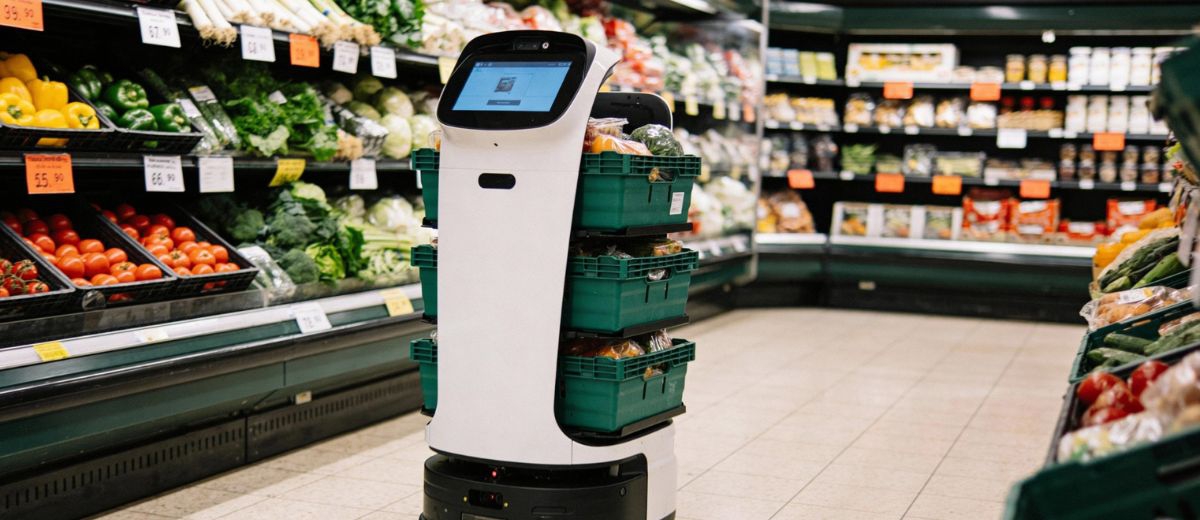
With rapid advancements in robotics, service robots are increasingly deployed in restaurants, hospitals, care facilities, and public spaces. Ensuring safe human-robot interaction has become a key industry priority. ISO 13482 (Robots and robotic devices — Safety requirements for personal care robots) provides an essential framework for safety design and verification, supporting safer product development and market entry.
ISO 13482 Focuses on Safety Requirements for “Personal Care Robots” in Non-Industrial Environments
Robots can be categorized according to their application scenarios into industrial robots, service robots, AGV/AMR autonomous mobile robots, humanoid robots, and others, each subject to different safety standards. Among these, ISO 13482 specifically focuses on service robots used in non-industrial environments to ensure safety and reduce hazards arising from human-robot interaction and fault conditions. ISO 13482 applies to ground-based service robots and establishes clear requirements for three main categories:
- Mobile service robots: Robots that can move and interact with people to perform service tasks, such as food delivery in restaurants, hospital transport, cleaning, and guidance services.
- Physical assistant robots: Robots that physically assist users in performing tasks, supplementing or enhancing personal capabilities, such as wearable exoskeletons or powered walking aids.
- Person-carrying robots: Robots designed to transport individuals to designated destinations, such as guided vehicles or shuttle systems.
Exclusions Under the ISO 13482 Service Robot Standard
ISO 13482 also specifies exclusions. The standard does not apply to the following types of products: robots exceeding speeds of 20 km/h, robot toys, waterborne or aerial robots, industrial robots, medical-purpose robots, or robots intended for military or public security applications. SGS advises machinery manufacturers to first confirm product positioning and intended use to ensure the correct regulations and standards are applied.
Functional Safety Requirements: Emergency Stop and Protective Mechanisms Must Meet Performance Levels
Regarding functional safety requirements for service robots, ISO 13482 specifies that personal care robots must incorporate protective mechanisms, including emergency stop, protective stop, and safety-related speed control (a total of seven safety functions). These mechanisms ensure that in cases of physical human contact, malfunction, or hazardous situations, the system can reliably safeguard users.
The standard also requires that relevant safety functions be evaluated in accordance with ISO 13849-1 or IEC 62061 and achieve the required Performance Level (PL) or Safety Integrity Level (SIL) to ensure system reliability.
AI Integration into Safety Functions Requires Consideration of Relevant AI Standards
If industrial or service robots integrate AI technologies to perform safety-related functions, compliance with relevant AI standards must also be considered. These include ISO 5469 (AI functional safety and AI systems) and ISO 5338 (AI system lifecycle processes). Manufacturers are advised to plan early to align with future market and regulatory trends.
SGS provides professional robot safety verification solutions to support safety testing and regulatory compliance throughout the stages of robot research and development, manufacturing, mass production, and market launch. For inquiries, please contact SGS: 📩 Karen.Peng@sgs.com 📞+886 2 2299 3279 ext. 3889