



AGV / AMR Safety Certification – SGS Supports Your Compliance with ISO 3691-4
AGVs (Automated Guided Vehicles) and AMRs (Autonomous Mobile Robots) are rapidly expanding in use. Companies must ensure safety and compliance in various operating scenarios, and ISO 3691-4 provides clear safety requirements and validation criteria. SGS offers professional safety verification services to support testing and regulatory compliance from R&D to market launch.
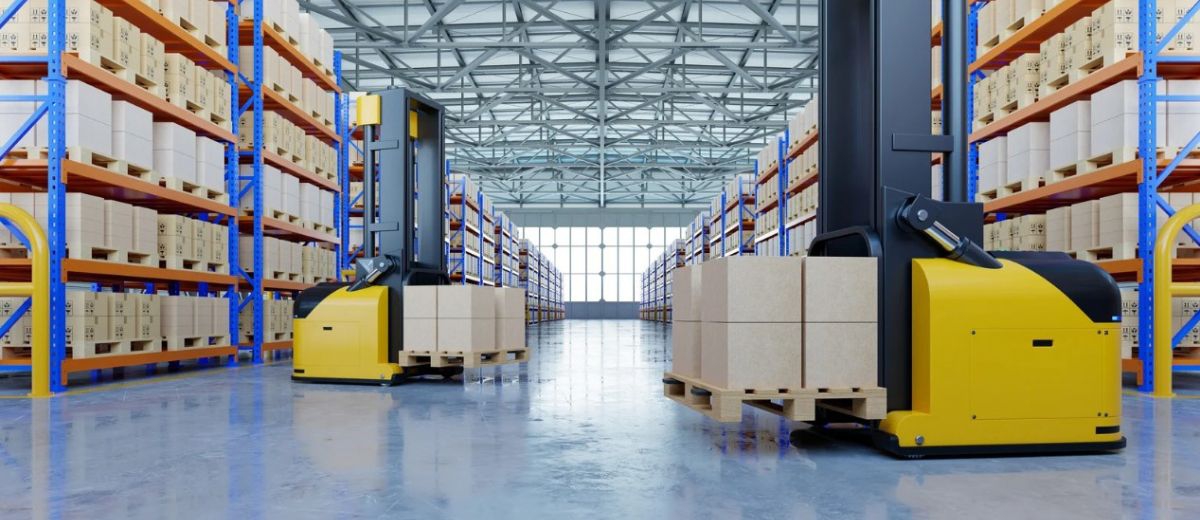
With the rapid growth of smart factories and intelligent logistics, AGVs (Automated Guided Vehicles) and AMRs (Autonomous Mobile Robots) are increasingly deployed in manufacturing and warehousing environments. As human-robot collaboration and automated operations expand, companies must ensure safety and compliance across various scenarios. ISO 3691-4 is a key safety standard for driverless industrial trucks—including AGVs, AMRs, automated guided vehicles, tunnel tractors, and mobile platforms—providing clear safety requirements and validation methods to support manufacturers and system integrators in establishing sound safety design and testing foundations.
Scope of ISO 3691-4 – Focus on Automated Operation
ISO 3691-4 primarily applies to driverless industrial trucks that operate automatically within enclosed or restricted areas and may also include manual or maintenance modes. The standard clearly defines exclusions, such as vehicles fully guided by mechanical rails or tracks, remote-controlled vehicles, and equipment operating on public roads, in explosive environments, or for military applications.
AGV / AMR Safety Requirements – Control Systems, Personnel Detection, Collision Prevention, and Mode Management
ISO 3691-4 outlines key safety requirements to reduce risks of collision, crushing, and unintended movement, thereby enhancing personnel safety and production stability. Key requirements include:
- Control systems must comply with ISO 13849-1 and achieve the required Performance Level (PL).
- Emergency stop devices and personnel detection systems (such as bumpers or virtual sensors) are mandatory.
- Prevention of unintended automatic restart.
- Clear distinction between automatic, manual, and maintenance modes.
- Collision protection systems must stop the vehicle before contact with personnel.
- Additional protective measures in loading/unloading zones (e.g., reduced speed or additional stop devices).
- Automatic switching of active detection fields based on operating zones.
- Electro-sensitive protective equipment must comply with IEC 61496-2 or IEC 61496-3.
- Electromagnetic immunity testing should reference EN 12895.
ISO 3691-4 Verification Focus – Stability, Structural Strength, and Dynamic Load Testing
ISO 3691-4 specifies essential validation tests, including:
- Stability Test (5.3.2): Verifies that the vehicle remains stable under worst-case conditions without tipping or sliding.
- Structural Test (5.4.2): Confirms that the vehicle body and attachments can withstand static and dynamic maximum loads without permanent deformation or damage.
- Dynamic Load Test (5.4.3): Simulates operational load cycles to assess safety during load movement; the vehicle should be secured during testing to ensure test safety.
AI Integration into Safety Functions – Compliance with AI Safety Standards
In recent years, AGVs and AMRs have increasingly incorporated AI technologies to enhance autonomous decision-making and operational efficiency. If AI is used to perform safety-related functions, manufacturers must also consider relevant AI standards, such as ISO 5469 (AI functional safety and AI systems) and ISO 5338 (AI system lifecycle processes), to mitigate risks arising from unpredictable AI behavior.
SGS provides comprehensive robot safety verification services to support compliance at every stage of product development and commercialization. For inquiries, please contact SGS: 📩 Karen.Peng@sgs.com 📞+886 2 2299 3279 ext. 3889