



Key Analysis of ISO 10218 Industrial Robot Safety Requirements: 2025 Edition Updates and Implementation Guidelines for the Machinery Manufacturing Industry
Industrial robots are essential equipment for automation in machinery manufacturing production lines. As a result, safety design and risk control have become critical factors that companies cannot overlook when implementing robotic systems. ISO 10218 provides a clearer framework and verification approach for robot safety requirements, helping manufacturers and system integrators establish consistent safety benchmarks. This article summarizes the key updates in the 2025 edition and explains practical considerations for implementation.
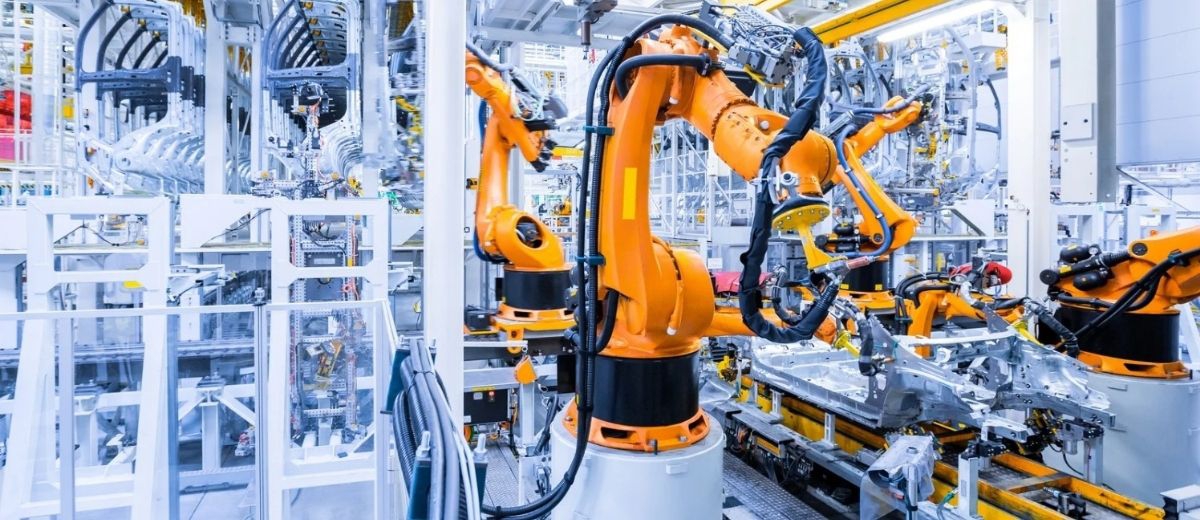
Industrial robots are widely used in handling, assembly, welding, machining, and inspection applications. Due to their high speed, high torque, and significant kinetic energy, appropriate safety design and risk control measures are necessary to prevent serious hazards such as crushing, collision, and entanglement. The international standard ISO 10218 (Robotics — Safety requirements) establishes systematic safety requirements for industrial robots and is divided into two parts: ISO 10218-1 and ISO 10218-2. These parts address safety requirements for the “robot itself” and for “robot systems and integration,” respectively, forming an essential foundation for industrial robot safety management. The latest version of ISO 10218 was published in 2025. SGS reminds the industrial machinery sector to pay close attention to the updated requirements in order to prepare in advance.
Scope and Applicability of ISO 10218-1
ISO 10218-1 primarily specifies safety requirements for the industrial robot itself. The standard focuses on the safety design and safety functions that the robotic arm must incorporate, such as speed monitoring, safe braking, and workspace limitation, ensuring that the equipment maintains a safe state during normal operation, reasonably foreseeable misuse, or fault conditions.
ISO 10218-2 addresses the safety of the overall robot workstation, including human-robot interaction and risk reduction design. This includes end-effectors and fixtures, sensors, fences, guards, light curtains, control systems, production line layouts, personnel pathways, and collaborative spaces.
ISO 10218 applies to robot manufacturers, safety engineers, and system integrators involved in robot system design and production. It serves as an important reference for product design, type validation, and market compliance.
New Classification System in the 2025 Edition (Class I / Class II)
To enhance the operability and consistency of safety requirements, the 2025 edition of ISO 10218 introduces a Class I and Class II classification system, along with corresponding functional safety requirements and test methods.
The classification is based on three key parameters. When all three parameters are below specified threshold values, the robot is classified as Class I. If any one of the parameters exceeds the defined limit, the robot is classified as Class II. The key parameters include:
- Mass per manipulator (M)
- Maximum achievable speed
- Maximum force per manipulator (FMPM)
Safety Functions and Functional Safety Requirements (PL / SIL)
ISO 10218-1 clearly requires industrial robots to incorporate multiple safety-related protective functions, such as emergency stop, speed monitoring, and workspace limitation (approximately 30 safety functions in total). These safety functions must achieve sufficient reliability to ensure that risks are effectively reduced in hazardous or abnormal conditions.
In addition, ISO 10218 requires that safety functions be evaluated for functional safety in accordance with ISO 13849-1 or IEC 62061, achieving the corresponding Performance Level (PL) or Safety Integrity Level (SIL). This establishes a verifiable and consistent level of safety control capability.
Key Points for AI Integration in Robot Safety Functions (Including AI Compliance)
If AI technology is incorporated as part of a robot system’s safety functions, compliance with additional standards must also be considered. These include ISO 5469 (AI functional safety and AI systems) and ISO 5338 (AI system lifecycle processes), ensuring that after AI integration, safety functions remain verifiable, consistent, and traceable.
SGS provides professional robot safety verification solutions to support safety testing and regulatory compliance throughout the stages of robot research and development, manufacturing, mass production, and market launch.
For more information, please contact SGS:📩 Karen.Peng@sgs.com 📞+886 02 2299 3279 ext. 3889